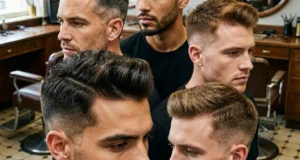
Discovering that your hairline is beginning to shift or thin can feel like an immediate crisis. The instinctive reaction for many men is to grow their hair out longer, attempting to create a sweeping curtain of camouflage over the temples. In reality, long hair often does the exact opposite—it emphasizes the thin areas by creating stark contrast with the dense patches.
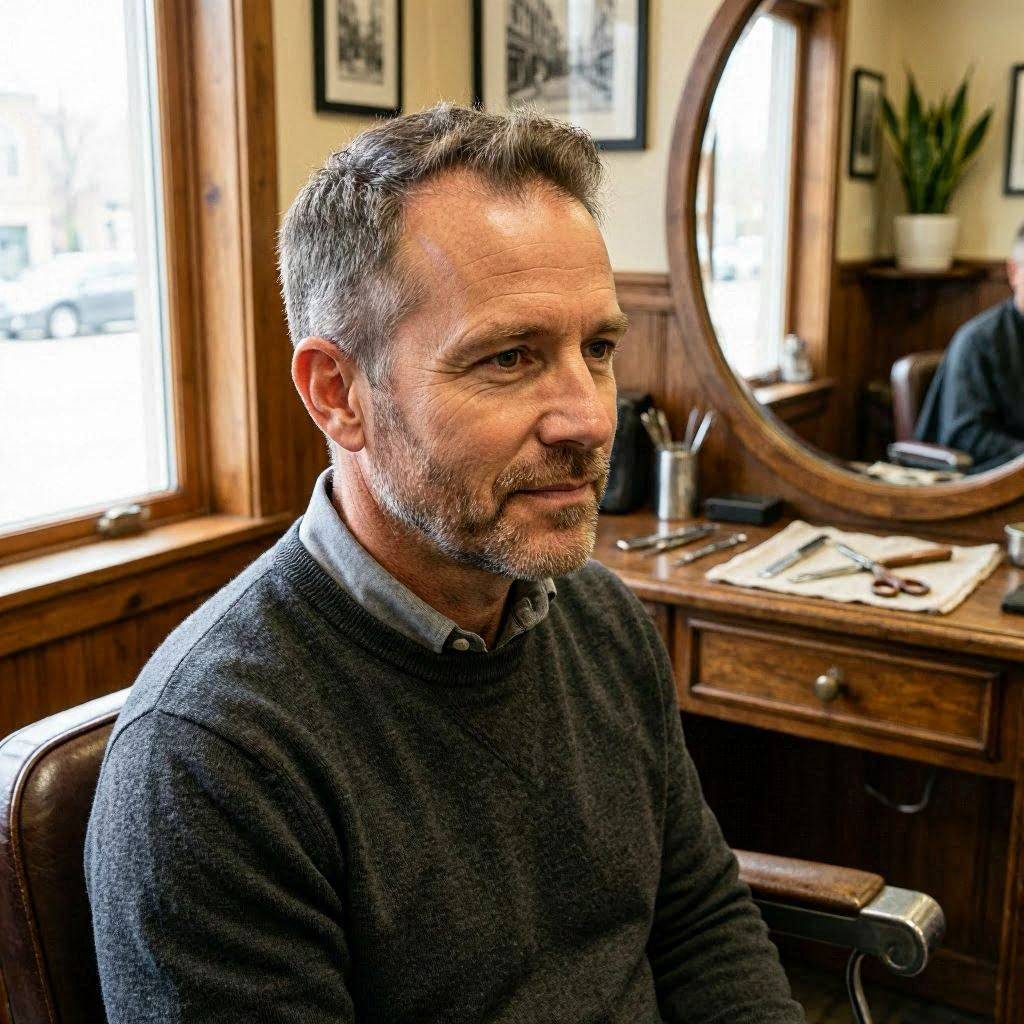
Choosing intentional good haircuts for men experiencing hair loss isn’t about completely hiding the hairline; it is about distracting the eye, restructuring the remaining weight, and utilizing angles to make the overall growth look completely uniform.
The Illusion Principle: Why Tighter Sides Matter
To understand why specific cuts work, you have to understand the visual weight of hair. When the hair above your temples recedes, it leaves a space of bare skin. If the sides of your head (around the ears) remain thick and bulky, the eye instantly notices the sudden drop in volume at the temples.
By shifting to styles that aggressively taper or fade the sides, you eliminate that visual contrast. Short sides blend seamlessly into the thinning temple areas, making the transition look like an intentional design choice rather than an unavoidable natural process.
6 High-Impact Haircuts for a Receding Hairline
1. The High Skin Fade Buzz Cut
The buzz cut is the ultimate power move for a receding hairline. When you cut the hair down to a uniform short length across the entire scalp, the distinction between where hair grows and where it doesn’t dramatically shrinks. Pairing this with a high skin fade means the hair around the ears completely vanishes into the skin, which visually draws attention upward toward your eyes and jawline instead of your forehead.
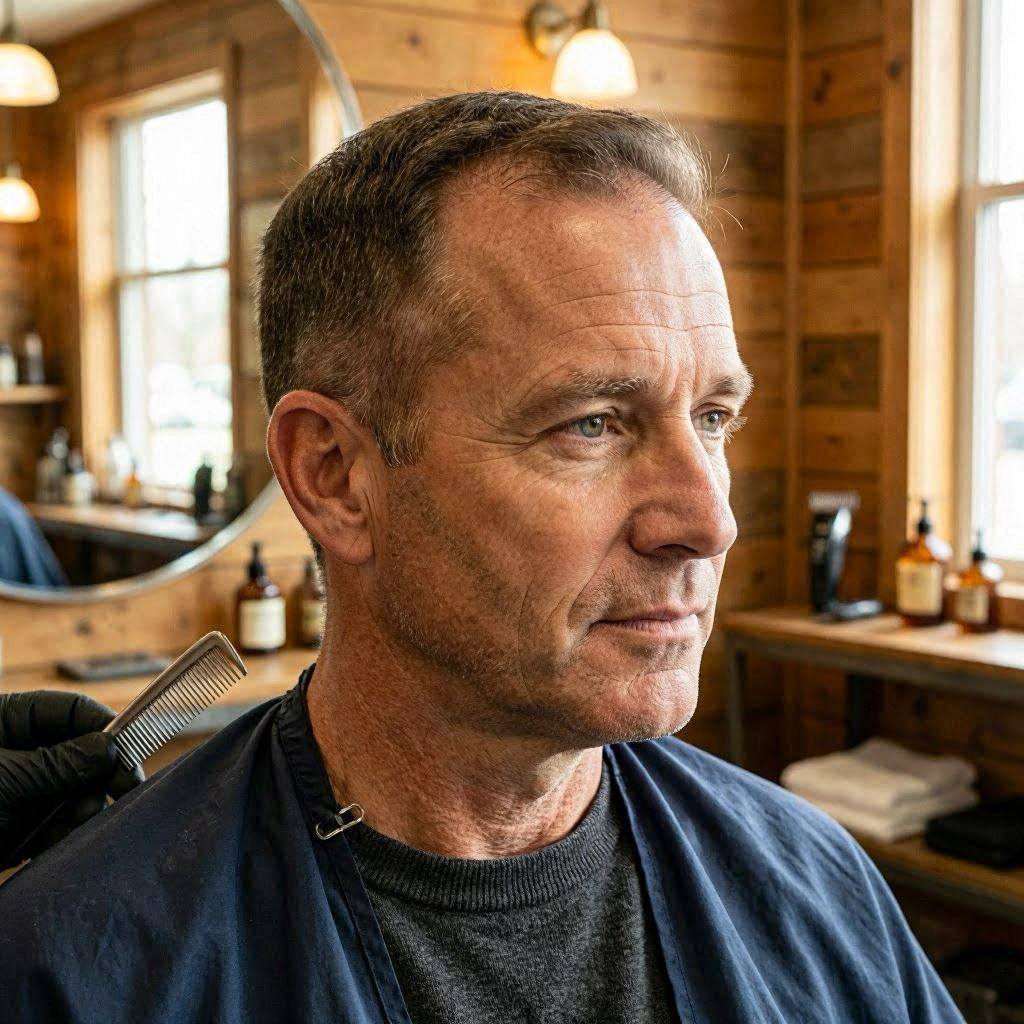
2. The Textured Crew Cut with Tapered Sides
Unlike a traditional buzz cut, a crew cut leaves slightly more length on top, which gradually tapers down toward the back. By applying a texturizing product to the top, you create a ruffled, unstructured aesthetic. This deliberate messiness makes it incredibly easy to organically style hairs over thin temple corners without looking like you are trying to hide them.
3. The Textured French Crop
The French crop is highly effective for masking an “M-shaped” or deeply receding hairline. This style involves short sides paired with a forward-swept fringe on top. The magic lies in the texture: the top is cut with point shears to create choppy, distinct layers. Because the hair naturally moves forward, it softens the appearance of the temples without requiring heavy styling gels or continuous maintenance throughout the day.
4. The Short, Structured Ivy League
If you work in a corporate environment that demands a highly formal look, the Ivy League is an excellent variation of the classic crew cut. It leaves just enough length at the front hairline to allow for a neat side part. Instead of sweeping the hair straight back (which exposes the receding corners), you style the front section diagonally across the forehead. This clean angle breaks up the deep recession points.
5. The Classic Regulation Cut
Derived from military standards, the regulation cut involves trimming the top hair down while defining a crisp, clear side part line. By choosing a part line that aligns exactly with the highest point of your receding temple, you make the recession look like a calculated part of the hairstyle’s structural anatomy. The rest of the hair is combed neatly over, offering an incredibly sharp profile.
6. The Textured Slick Back with a Mid Drop Fade
For men who still possess considerable density right in the middle of their hairline but have lost ground exclusively at the sides, a short slick back works beautifully. Instead of flattening the hair flat against the skull, use a blow dryer to inject high volume at the roots. Slicking the hair up and back with a matte product creates a sweeping motion that blends the longer central hairs with the shorter sides.
Comparing the Approaches: Concealment vs. Acceptance
Choosing the right direction depends entirely on your specific pattern of recession and your personal daily routine.
| Haircut Option | Best Suited For | Maintenance Level | Styling Product Needed |
| French Crop | Advanced temple recession with a thick crown | Low to Medium | Matte Clay or Texture Powder |
| High Buzz Cut | Diffuse thinning across the entire top area | Very Low (No daily styling) | None |
| Ivy League / Side Part | Early-stage recession with good frontal density | Medium | Light-hold Wax or Pomade |
| Slick Back / Pompadour | Recession limited strictly to temple corners | High (Requires blow drying) | High-volume Sea Salt Spray |
Barbershop Directives: What to Tell Your Barber
Getting a great outcome requires communicating structural needs rather than just asking for a trendy name. Use these specific points during your next visit:
- Request “Texture” Instead of “Blunt Cuts”: Tell your barber you want point cutting or texturizing shears used on top. Sharp, straight-line cuts make thin hair look sparse, whereas choppy textures create the optical illusion of density.
- Keep the Fade High: If you are opting for a fade, ask for a high fade that meets the scalp right where your temple recession begins. This completely neutralizes the contrast between skin and hair.
- Avoid Heavy Lines at the Front: Do not let a barber try to sharp-line or “shape up” a deeply receding front hairline with clippers. Forcing a artificial straight line on a receding shape creates an awkward, unnatural boundary that grows out poorly within days.
Essential Styling Tactics for Thinning Hair
The products you used in your early twenties may no longer serve your hair’s current architecture. Heavy, water-based gels and high-shine pomades clump individual hair strands together. When hairs clump up, they expose the pale scalp underneath, drastically worsening the appearance of thinning sections.
The Golden Rule: Shift your entire styling arsenal toward matte finishes and volumizing agents.
The Styling Protocol:
- Pre-Styling: While your hair is damp, apply a few sprays of sea salt spray or a small amount of volumizing mousse.
- Blow Drying: Use a blow dryer on a medium-heat setting. Use your fingers to lift the hair upward and forward from the roots. This sets a high-volume foundation that keeps hair from falling flat.
- Finishing: Take a very small amount of matte clay, styling powder, or dry paste. Rub it thoroughly between your palms until it is completely clear, then lightly dust it through the tips of your hair to lock the texture in place without adding heavy weight.